Picture a Reno RN a decade into hospital nursing, skilled, respected, and quietly exhausted by rotating night shifts and mandatory overtime. She loves patient care but wants more control over her schedule and her earning ceiling.
One day a colleague mentions aesthetics, and something clicks: the same clinical judgment she uses every shift, applied to a calmer, more creative kind of medicine. That’s the moment many nurses start asking a very practical question: how do you become a nurse injector without gambling your license or your income on the wrong program?
If that scenario feels familiar, you’re in good company. Interest in aesthetic medicine is rising alongside the broader market: Grand View Research valued the global aesthetic medicine market at USD 98.8 billion in 2025, projecting growth to USD 240.0 billion by 2033.
This guide is written for licensed nurses weighing that transition. It covers what the role actually involves, the step-by-step path, Nevada’s scope-of-practice rules, how to vet a training program, and how to fit training around a full-time job.
Ready to Start Injecting?
Online coursework plus live-patient training in Reno, taught by active injectors. CEU/CME credit and flexible payment plans available.
What Is a Nurse Injector?
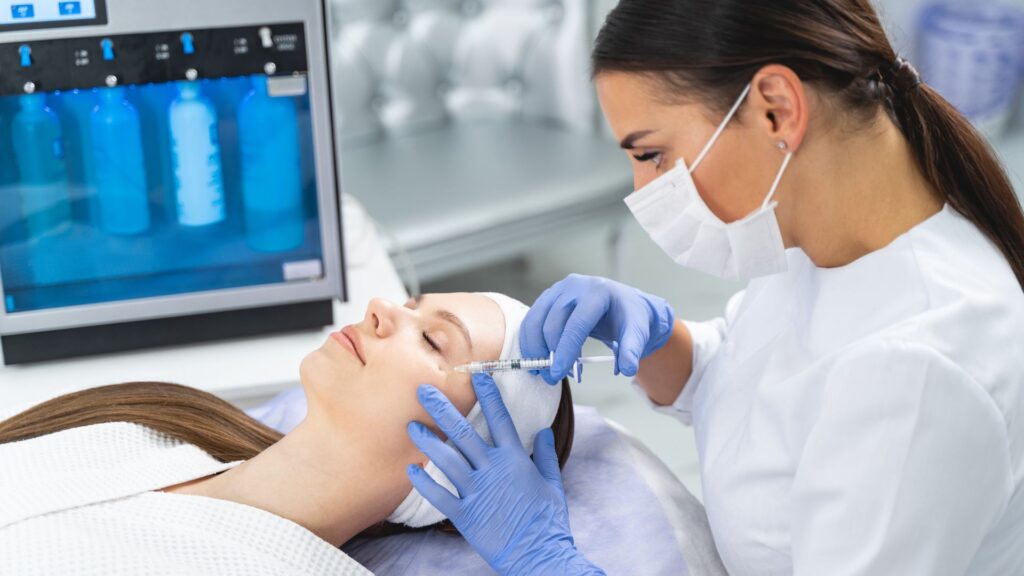
A nurse injector is a registered nurse trained to administer neuromodulators like Botox and dermal fillers, typically working under a supervising medical director in a med spa, dermatology office, or aesthetic practice.
The role blends clinical judgment with an artist’s eye for facial balance, pairing precise injection technique with a genuine understanding of anatomy and patient goals. Building that combination of clinical skill and aesthetic sensibility is the heart of quality facial aesthetics training.
You’ll also see the terms “aesthetic nurse injector” and “RN injector” used interchangeably for this position. It’s worth distinguishing from the broader “aesthetic nurse” role, which can span additional non-injectable services.
If you’re mapping out the wider career path and want to become an aesthetic nurse in the fullest sense, our guide on the full aesthetic nurse pathway covers that ground. The core skills of a nurse injector stay consistent: thorough patient consultation, skin and facial anatomy assessment, treatment planning, and refined injection technique.

How to Become a Nurse Injector: The Step-by-Step Path
Becoming an aesthetic injector follows a clear, four-step sequence. Think of continuing education as an ongoing thread that runs through your whole career, not a single box you check and forget. Here’s the path at a glance:
Earn your RN license (ADN or BSN, then pass the NCLEX-RN).
Gain clinical experience to build patient-assessment skills and confidence with procedures.
Complete aesthetic injector training covering neuromodulators, dermal fillers, facial anatomy, and complication management.
Get certified and start treating patients under a supervising medical director, with ongoing CE.
Can I inject Botox if I'm not a nurse?
Injecting is generally reserved for qualified licensed providers. Nurse practitioners, physician assistants, and physicians can also inject per state law. If you hold an LPN license, the rules are more limited; see our guide on whether an LPN can do Botox. Always confirm your specific scope with your state board.
Step 1: Earn Your RN License
Your foundation is becoming a registered nurse. You can complete either an Associate Degree in Nursing (ADN) or a Bachelor of Science in Nursing (BSN), then pass the NCLEX-RN to earn licensure. Keep in mind that each state board sets the scope of practice for its licensed nurses, a point that matters when we get to Nevada’s rules below.
Step 2: Gain Clinical Experience
Hands-on hospital or clinical experience builds the exact skills injecting demands: sharp patient assessment, comfort with needles and procedures, and the ability to recognize and respond to complications early. There’s no universal legal minimum, but most programs and employers look for a solid base of RN experience before you start injecting. The clinical maturity you already have as a working nurse is a genuine advantage.
Step 3: Complete Aesthetic Injector Training
This is where you build the specialized skill set. Quality nurse injector training covers neuromodulators (Botox, Dysport), dermal fillers, and, critically, facial anatomy for injectors, including muscles, fat pads, nerves, and vasculature.
Strong programs also emphasize complication management and, above all, live-patient hands-on hours. For a deeper look at filler-specific technique, our dermal filler injector guide goes further.
One thing worth clarifying: there’s no single mandatory national “nurse injector certification.” Credibility comes from program quality, not a universal license, so choosing the right training matters enormously. That’s exactly why we’ve included a vetting checklist below.
Step 4: Get Certified and Start Working as an Aesthetic Nurse Injector
Once trained, you’ll typically earn a certificate of completion and begin treating patients under medical director supervision, gradually building your patient base while maintaining ongoing CE/CEU credits. Aesthetic injectors commonly work in settings such as:
Medical spas and med spa chains
Dermatology practices
Plastic surgery and cosmetic surgery offices

How Long Does It Take to Become a Nurse Injector?
The realistic timeline depends mostly on where you’re starting. Earning your RN license is the longest part of the process, typically two to four years depending on whether you pursue an ADN or BSN. Once you’re licensed and have clinical experience, the injector-specific training and certification can often be completed in a matter of weeks to a few months.
For a working nurse, the honest concern is fitting this around full-time shifts. The good news: many credible programs are built for exactly that, combining online coursework with concentrated live-patient hands-on training in weekend or intensive formats.
A hybrid online-plus-live model lets you study on your own schedule and save travel and clinic days for the hands-on component.
How long does it take to be a nurse injector?
Most of the timeline is earning your RN license (roughly two to four years for an ADN or BSN). After that, with some clinical experience behind you, injector-specific training and certification can often be completed in weeks to a few months.
Nevada Scope of Practice for RN Injectors
If you plan to practice in Nevada, your scope is governed by the Nevada Nurse Practice Act under NRS Chapter 632, administered by the Nevada State Board of Nursing.
In general, Nevada RNs administering injectables do so under the supervision of a physician or medical director, consistent with how aesthetic practices structure their teams. Advanced practice registered nurses have a distinct, broader statutory scope, including certain prescribing authority under NRS 632.237.
This is not legal advice. Regulations change, and the specifics of supervision, delegation, and delivery can get nuanced. Before you start practicing, verify the current requirements directly with the Nevada State Board of Nursing. It’s the authoritative source, and confirming your obligations firsthand protects both your patients and your license.

Nurse Injector Training and Certification: How to Vet a Program
Because no universal certification exists, the program you choose becomes the real signal of your credibility to future employers and patients. Not every course is created equal. Some are rigorous; some fall well short. Use this checklist to tell a credible program from a shallow one:
Working injector instructors, educators who actively inject, not just lecture from slides.
Live-patient hands-on hours, real patients under supervision, not just mannequins or observation.
Facial anatomy and complication management built into the curriculum, not glossed over.
CE/CEU (and CME where relevant) accreditation so your credit counts.
Ongoing mentorship and support after the course ends, not a one-and-done weekend.
Transparent curriculum and pricing with no vague promises or hidden fees.
When a program checks these boxes, you can trust that your certificate reflects genuine competence, and med spas will recognize that difference when you apply.
Nurse Injector vs. NP Injector vs. Physician Injector
Nurses aren’t the only professionals who inject. Here’s how the roles typically compare in terms of training path and supervision, always subject to your state’s specific rules:
Role | Typical License / Training Path | Supervision Typically Required |
|---|---|---|
Nurse Injector (RN) | RN license (ADN/BSN) + aesthetic injector training | Yes, practices under a supervising medical director |
NP Injector | RN + graduate degree (nurse practitioner) + aesthetic training | Often more autonomy; varies by state |
Physician Injector | Medical degree (MD/DO) + aesthetic training | Independent; may serve as the medical director |
In a typical med spa team, the physician often serves as the medical director overseeing care, while RN injectors handle a large share of day-to-day aesthetic treatments. It’s a structure that keeps the nurse injector role both central and in demand.
Do nurse injectors make good money?
Nurse injecting can be a financially rewarding career, with earnings influenced by location, experience, setting, and clientele. For a full breakdown, see our dedicated guide to Botox injector salary.
Why Proper Training Matters for Patient Safety
Aesthetic injections may be non-surgical, but they’re true cosmetic procedures with real risk. When filler is placed near facial vasculature without a thorough grasp of anatomy, complications can range from bruising to serious vascular events.
That’s exactly why advanced anatomy education, complication-management training, and proper medical director supervision matter so much. Well-trained injectors are simply better equipped to prevent problems and respond confidently when they arise.
The vetting checklist above isn’t bureaucratic box-ticking. Strong training protects your patients and your reputation, and it’s what separates a confident injector from a risky one.
How to Vet a Nurse Injector’s Credentials (For Patients)
If you’re a patient rather than a prospective nurse, the same principles help you choose safely. Before booking with any aesthetic injector, it’s reasonable to ask:
License verification: Confirm the injector holds an active RN (or other qualifying) license.
Training background: Where and how they trained, and whether it included live-patient hands-on hours.
Before-and-after photos of their own work, not stock images.
Medical director oversight: Who supervises the practice’s aesthetic care.
A qualified injector will welcome these questions. Transparency about credentials is one of the clearest markers of a trustworthy, professional practice.
Can you become an injector as an RN?
Yes. Becoming an injector as a registered nurse is a well-established, standard pathway, alongside nurse practitioners and physicians. Your existing clinical foundation makes the RN route one of the most common ways into aesthetic medicine.
Start Your Nurse Injector Training With AMT in Reno
At Aesthetics Medical Training, your education is led by founder Jasmine Wells, who brings 25+ years of practical aesthetics experience, and by instructors who are active, practicing injectors, not lecturers reading from a script. That means you learn technique that’s current, real, and refined in actual practice.
AMT’s program pairs online coursework with live-patient hands-on training right here in Reno, no travel to Las Vegas required. You’ll earn CEU/CME credit, and flexible payment plans make it feasible to invest in your future while you’re still working.
Courses include both Botox and dermal filler training, grounded in the facial anatomy and safety fundamentals that credible practice demands. If you’re still deciding which route fits you best, our guide on how to become a Botox injector can help you plan your first course, or you can learn more about aesthetic medicine as a field.
Ready to make the leap? Explore AMT’s courses in the online classroom, or contact us with your questions. You can also call (775) 825-1586. Your next chapter in medical aesthetics starts with training you can stand behind.