
The demand for aesthetic treatments is rapidly increasing, with the global market for non-surgical procedures, like Botox and dermal fillers, expected to reach $190,549.6 million by 2030 at a compound annual growth rate of 15.4% from 2024 to 2030, according to Grand View Research.
As the market grows, there is a pressing need for skilled professionals specializing in facial rejuvenation techniques. Aesthetics Medical Training (AMT) stands out as a leader in providing comprehensive facial aesthetics training for healthcare professionals, focusing on Botox, laser treatments, and dermal fillers.
This article will explore:
The Growing Demand for Facial Aesthetic Procedures
The demand for non-surgical aesthetic treatments, such as Botox, laser therapies, and dermal fillers, is on the rise. In 2023 alone, nearly 16 million surgical and 19.2 million non-surgical cosmetic procedures were performed across the globe, the International Society of Aesthetic Plastic Surgery reports.
This trend is driven by a growing preference for less invasive options that offer quick recovery times and natural-looking results. However, as the popularity of aesthetic procedures grows, so does the need for qualified aesthetic practitioners.
Proper certification courses and training in facial anatomy, injection techniques, and the mechanism of action of botulinum toxin are crucial for ensuring patient safety and achieving desired outcomes.
What is the difference between basic and advanced facial aesthetic training?
Basic training covers the essentials, while advanced training goes deeper into techniques, confidence, and treating more complex client needs.
Why Facial Training Courses Are Worth It
A strong foundation in facial anatomy helps practitioners recognize the subtle variations in muscle movement, skin thickness, and bone structure that influence how Botox and dermal fillers behave once injected.
Renowned physicians focus on facial anatomy first when doing their training certification because a good grasp delivers the following benefits:
Patient Safety
Understanding facial anatomy helps avoid critical structures (arteries, veins, nerves), reducing the risk of complications.
Accurate Product Placement
A solid grasp of anatomical layers (skin, fat compartments, muscle, fascia, periosteum) ensures injectables are placed at the correct depth and plane for optimal results.
Predictable Aesthetic Outcomes
Knowledge of how facial structures interact allows practitioners to create balanced, natural-looking enhancements.
Individualized Treatment Planning
Facial anatomy varies significantly between individuals (age, sex, ethnicity, skeletal structure), and anatomical insight supports tailored, patient-specific approaches.
Longevity of Results
Proper placement respecting anatomical support structures improves product integration and durability.
Small group training sessions are especially effective because they allow for direct feedback and observation. You’re able to refine your approach, ask questions in real time, and gain insights that simply can’t be learned in a lecture hall.
Many facial aesthetics training programs even combine interactive courses with live demonstrations to help you see how expert injectors analyze and treat different faces.
What certifications are offered after completing a facial aesthetic training course?
You’ll typically receive a certificate of completion that shows you’re trained and ready to offer facial aesthetic treatments professionally.
What Are the Prerequisites for Facial Aesthetics Training?
Most medical aesthetics training programmes are designed for licensed medical and healthcare professionals, as a solid clinical foundation is essential for safe practice. Common prerequisites typically include:
A Recognised Medical Qualification
Facial aesthetics training is typically designed for doctors, nurses, dentists, and other qualified healthcare professionals, with current professional registration where required by local regulations. This ensures practitioners already possess baseline knowledge of patient care, anatomy, and clinical responsibility.
Prior Experience Not Always Necessary
Prior experience in aesthetics is not always necessary (unless one is joining advanced courses). Many programmes are structured to introduce core concepts such as facial anatomy, patient assessment, and safety protocols before progressing to hands-on techniques. This makes facial aesthetics training accessible to qualified professionals who are new to the field but eager to expand their skill set.
Strong Commitment to Ongoing Education
In addition to formal qualifications, successful candidates should demonstrate a strong commitment to ongoing education and professional development. Facial aesthetics is an evolving field, and training providers often expect practitioners to maintain high ethical standards, prioritise patient safety, and continue advancing their knowledge through further study and practical experience.

What Facial Aesthetics Training Courses Are Available
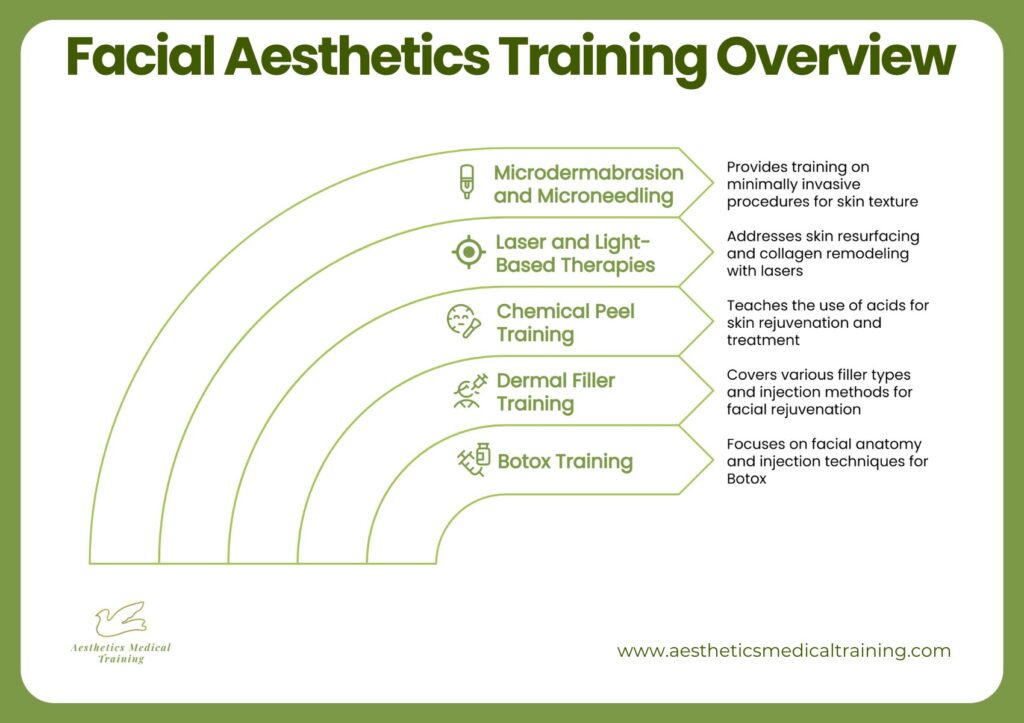
With the increasing demand for non-surgical aesthetic procedures, several injectable training programs have emerged as the most sought-after in the industry. These programs focus on key areas such as Botox, dermal fillers, and chemical peels, offering comprehensive learning experiences for medical professionals.
Botox and Botulinum Toxin Aesthetic Course
Training programs in Botox and Botulinum Toxin focus on understanding facial anatomy, injection techniques, and the mechanism of action of these toxins. Aesthetics Medical Training, for example, offers a comprehensive Botox training course that includes hands-on Botox injection training and patient care protocols.
Dermal Filler Medical Aesthetic Training
Dermal fillers are crucial for facial rejuvenation, helping to restore volume and reduce the appearance of wrinkles. Aesthetics courses in injectable procedures cover various types of fillers, injection techniques, patient assessment, and treatment protocols. According to the American Society of Plastic Surgeons, over 3.4 million dermal filler procedures were performed in the U.S. in 2023.
Chemical Peel Aesthetic Certification
Chemical peels are a popular choice for skin rejuvenation and treating a wide array of skin conditions, such as acne scarring and age spots. Chemical peel training programs focus on the use of different types of acids, such as AHA (Alpha-Hydroxy Acids) and BHA (Beta-Hydroxy Acids), and the application of medical-grade chemical peels.
Laser and Light-Based Therapies
Laser treatments and light-based therapies are essential for addressing skin resurfacing, pigmentation, and collagen remodeling. Training programs typically cover different technologies, skin care resurfacing techniques, and treatment plans to manage adverse events and ensure patient safety.
Microdermabrasion and Microneedling
These minimally invasive procedures are popular for treating superficial skin concerns like acne scars and skin texture. Training in microdermabrasion and microneedling includes understanding the physiological effects on the skin, patient expectations, and post-procedure care. Courses often involve hands-on practice with dermal rollers and needle pens to master the techniques and achieve optimal results.
What can I earn with facial aesthetic treatments?
Earnings vary, but many practitioners charge per treatment, which can quickly add up to a strong, flexible income stream.
Aesthetics Education and Hands-On Training in Reno. Enroll Today for Facial Certification
Aesthetics Medical Training combines science and artistry to help aestheticians and registered nurses build real-world skills in aesthetic medicine. Our hands-on programs cover Botox, laser treatments, and filler training, giving you a well-rounded foundation to grow with confidence.
You’ll learn the science behind Botox,proper safety protocols, and ethical best aesthetic practices. Our laser training explores modern laser technology, skin types, and hands-on treatment techniques. Dermal filler courses focus on facial analysis, advanced aesthetic injection methods, and creating natural-looking results safely.
When you train with AMT, you gain expert instruction, practical experience, and a supportive learning environment designed for professional growth. Ready to take the next step? Explore our courses and start your journey in facial aesthetics today. Enroll today for a career in aesthetics!